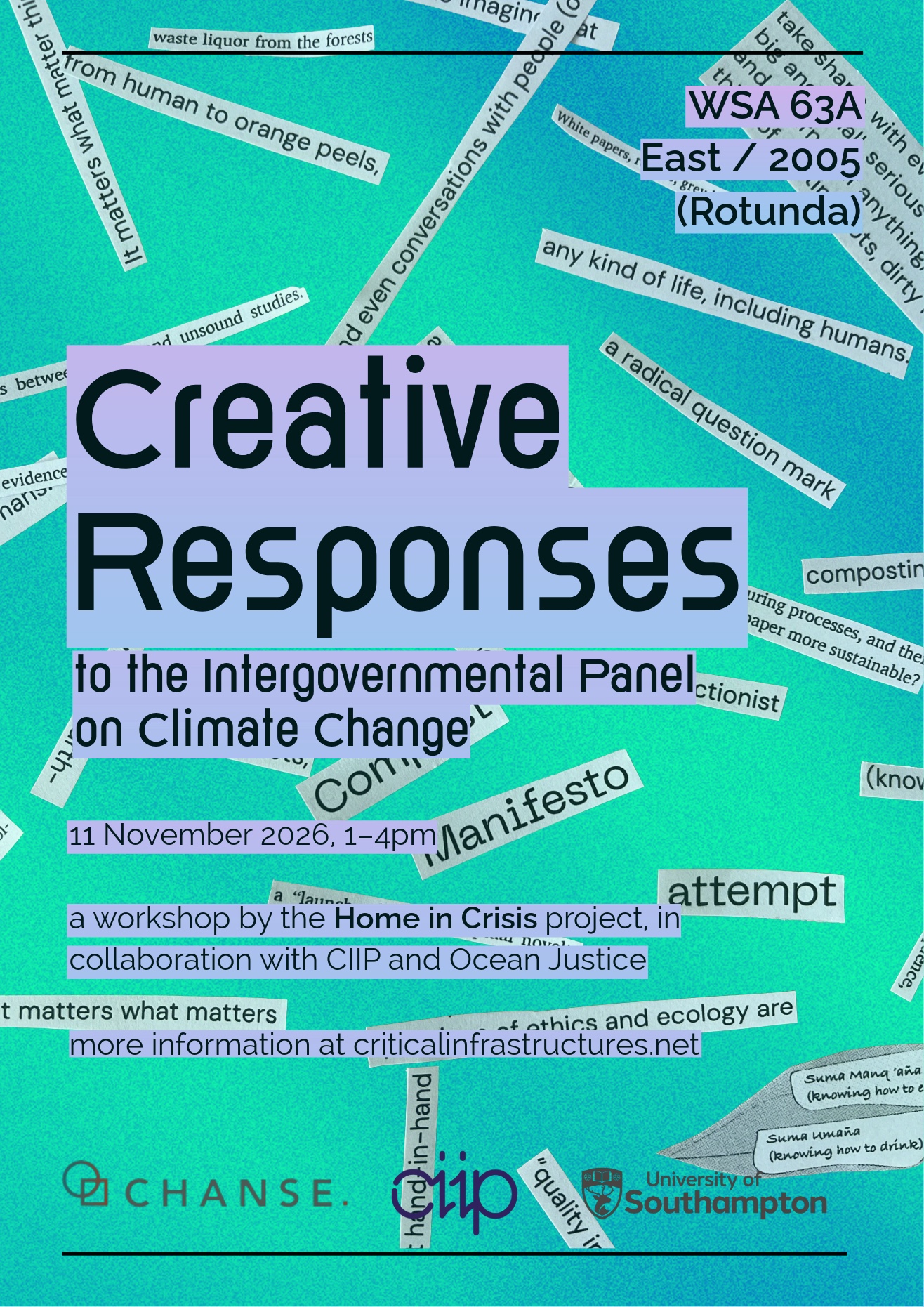
Creative Responses to the Intergovernmental Panel on Climate Change

Who has the right to help, speak, or respond in a crisis? How close to home does that crisis have to be?

On 11 November 2026 CIIP, together with the Ocean Justice research group, will join the ‘Home in Crisis‘ project and the Sustainability and Resilience Institute for a creative experts workshop addressing the Intergovernmental Panel on Climate Change reports.

The Intergovernmental Panel on Climate Change (IPCC) ‘is the United Nations body for assessing the science related to climate change’. Their work feeds into climate policy and law that impacts each and every one of us, but perhaps especially those of us who live in coastal communities like Southampton. Different kinds of experts around the world are invited to give responses to and feedback on IPCC reports to help ready them for final publication.

Typically these are experts from (for example) physical or social sciences, but the IPCC wants wider and more diverse feedback. In this making workshop we will invite arts and humanities experts to weigh in on the reports from Working Group II: Impacts, Adaptation and Vulnerability using our own methods. We may not be the experts who first come to mind when we use the words ‘climate change experts’, but as the ‘Home in Crisis’ project shows, arts and humanities experts have vital and central contributions to make to these discussions.

Following the workshop we will collate the creative responses and submit them to the IPCC by the its 4 December 2026 deadline.

This workshop will take place with the Critical Infrastructures and Image Politics research group at Winchester School of Art, but is also open to member of the Ocean Justice research group and other colleagues across the university. In the workshop we will think through ‘home in crisis’ by creatively responding to the IPCC reports. Materials will be provided, but you are also welcome to bring your own preferred supplies.

Questions we might ask ourselves as part of this session include: What are the implications of being distanced from but connected to Southampton at the University of Southampton’s satellite campus in Winchester School of Art? What are the implications of offering commentary as experts from a field who is considered ‘marginal to’ or ‘not at home in’ a discussion? Are there any communities that are not impacted by what happens to the ocean? In what ways can we educate ourselves on, feel with, and stand in solidarity alongside coastal communities?

Event catering and transport costs for those not based in Winchester are generously provided by the CHANCE ‘Home in Crisis’ project. Please contact Dina Lupin (D.Lupin@soton.ac.uk) for details.

The Ocean of Life: Where Past Meets Future

In July 2026 CIIP held an in-person international seminar in Okinawa running 1-3 July 2026, co-organised with colleagues at the University of the Ryukyus, and the SEA-EU European University of the Seas represented by Prof. Monika Szuba (University of Gdańsk).

The Ocean of Life seminar explored cultural, intellectual, and environmental challenges, including the impact of colonialism on oceanic exploration, the ocean as a source of myth and identity, and the role of sea narratives in the modern global economy and ecology.

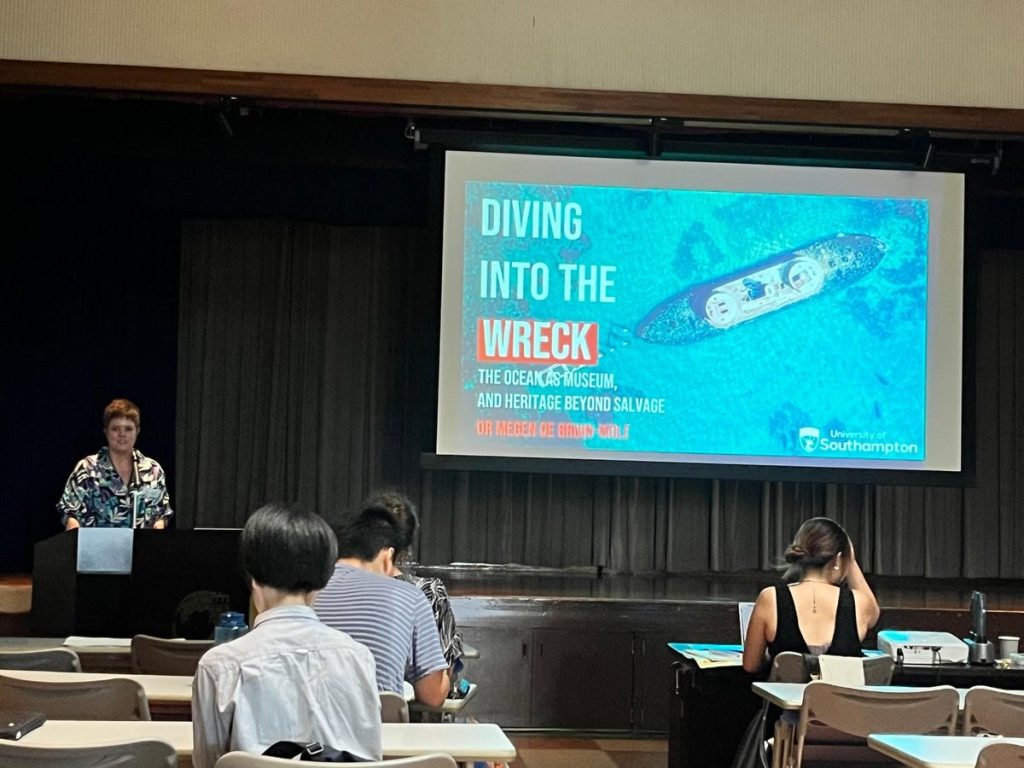
CIIP co-directors presented work on ‘Diving into the Wreck: The Ocean as Museum, and Heritage Beyond Salvage’, and
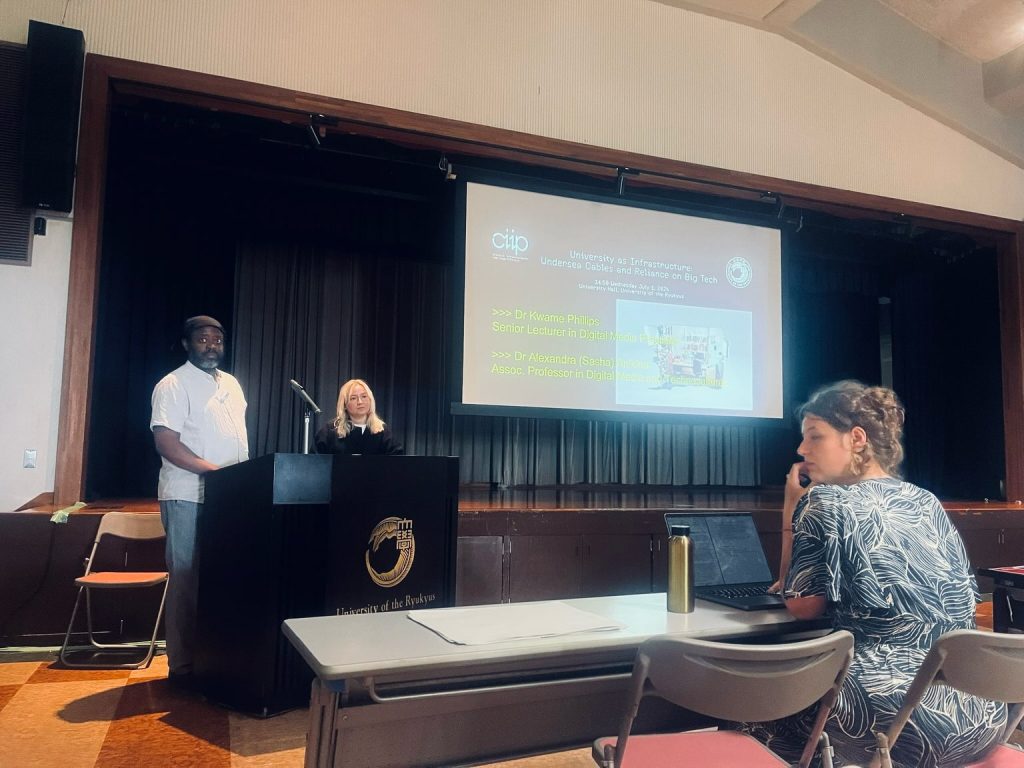
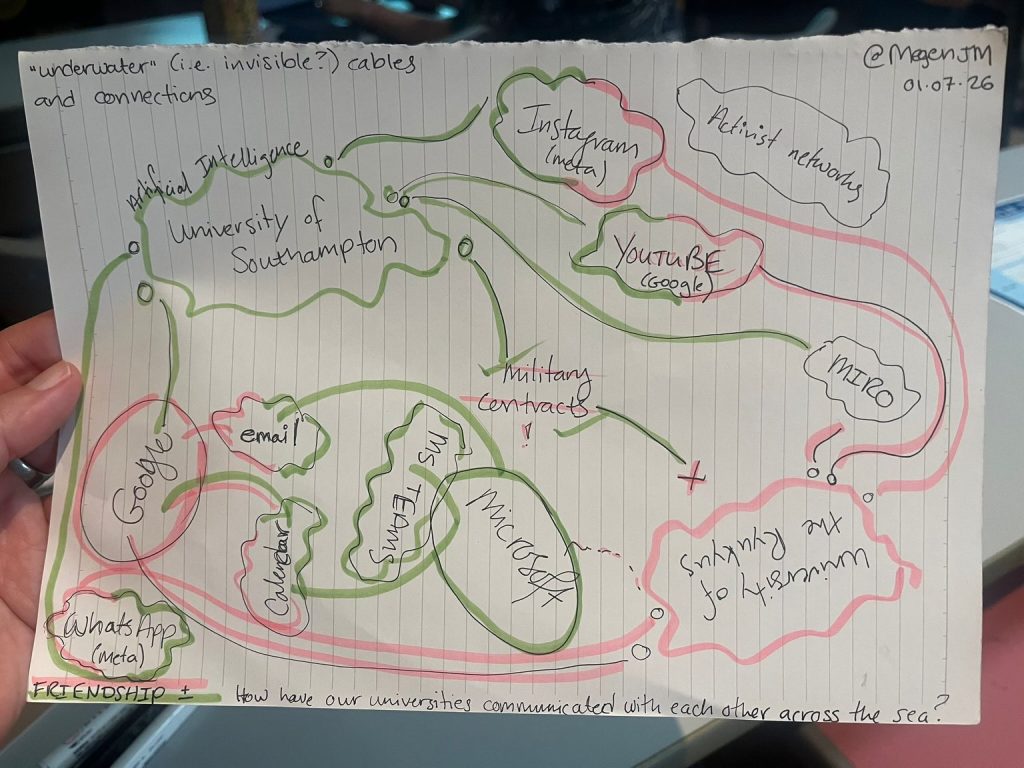
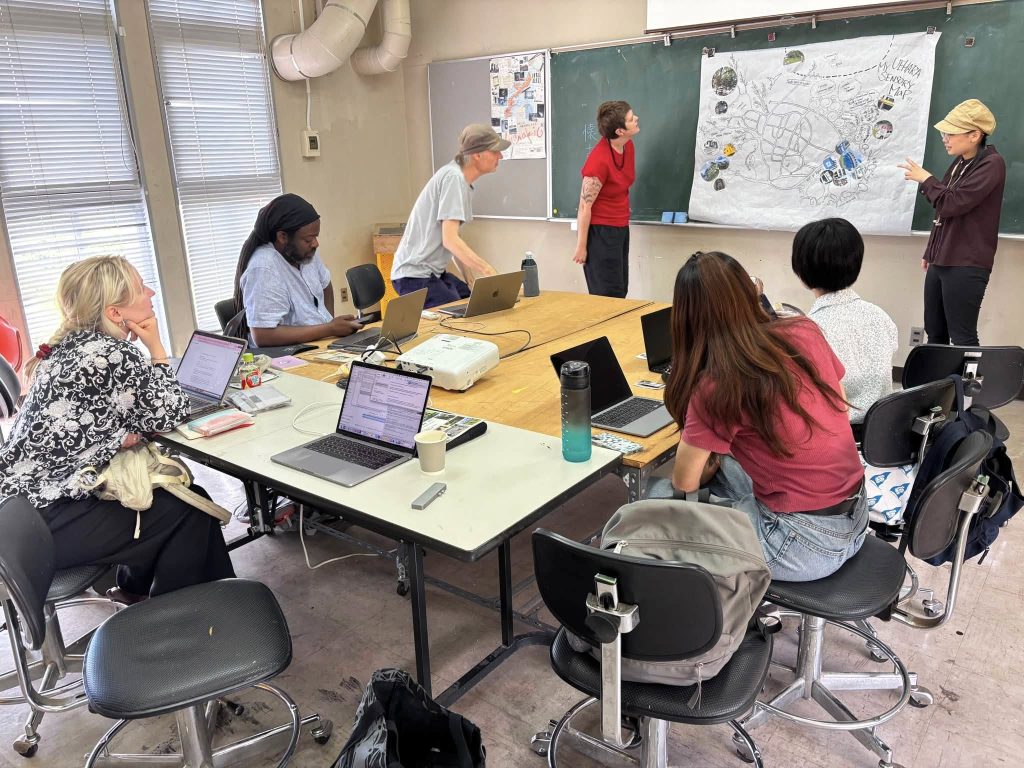
conducted a University as Infrastructure mapping workshop adapted for the coastal university context, ‘University as Infrastructure: Undersea Cables and Reliance on Big Tech’.

(Images from the CIIP Instagram account)

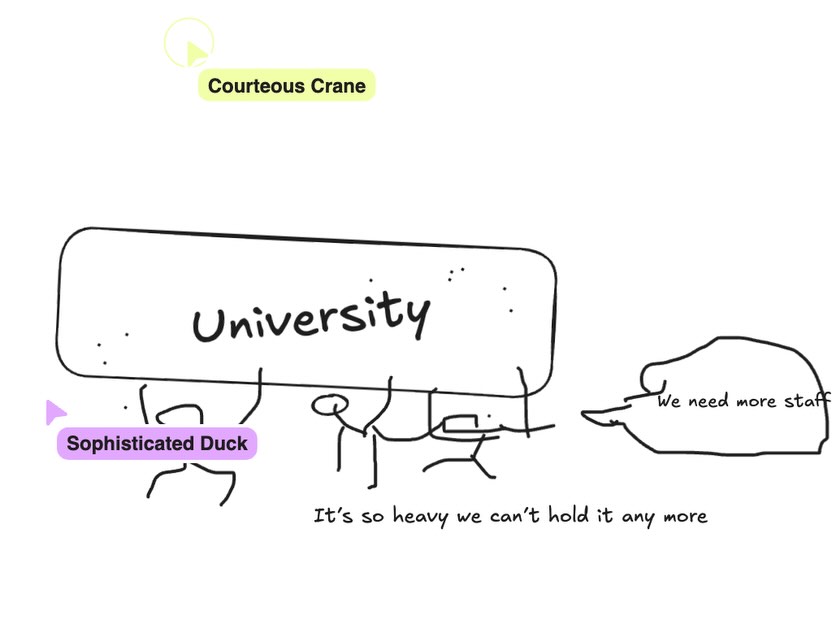
We also participated in student presentations of practice-based work.

(Image by Naoko Uchima)

For more information see the event website: https://international-seminar-ocean.my.canva.site

Reimagine University: Practice-Based Research in Coastal Universities

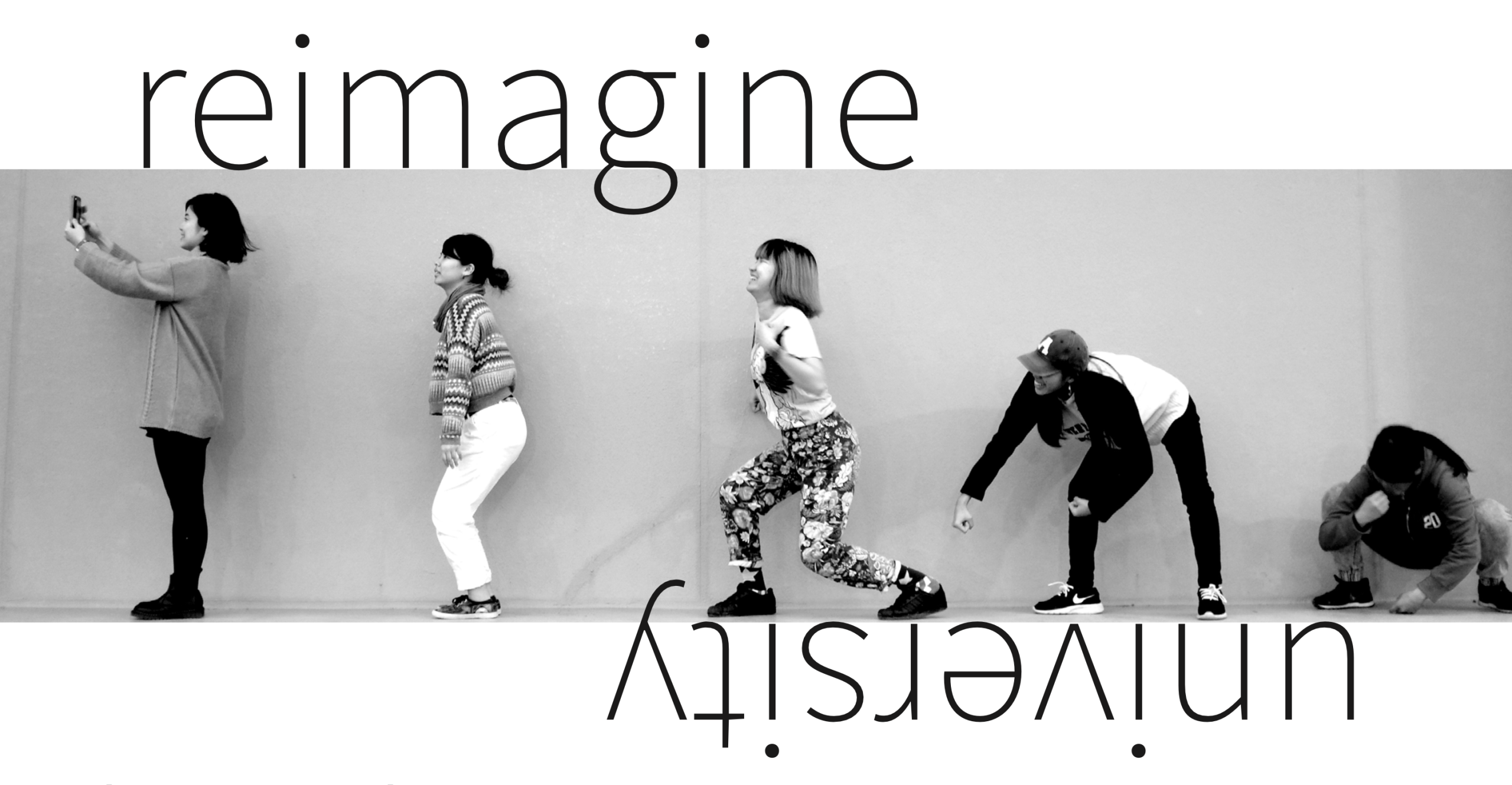
‘Reimagine University’ is an experimental practice research collaboration between staff and students at the University of the Ryukyus, University of Southampton, and University of Gdańsk. PRAG-UK’s Steven Hill writes that ‘Practice as research is set apart by new ways of conceptualising the research process, often leading to an increased diversity in research outputs…Research considered in this light is embodied in the world, with real and direct connections to society’ (ukri.org, 2023).

Reimagine University explores “art as a means to innovate and instigate change in the university context”. Through this and subsequent conversations, and drawing from our shared interdisciplinary background in art, literature, theatre and pedagogy, we advocate for reimagining the university as a creative, inclusive, and socially responsive space.

The field of practice research is still emerging in Japan and is often defined quite differently than in other international contexts; the University of the Ryukyus is among the few institutions actively pioneering this specific approach at the university level. Winchester School of Art at the University of Southampton has been one of the UK’s leading centres for practice research since the 1990s. Both are coastal institutions offering strong commitments to and benefits for their coastal communities, evidenced by our SEA-EU collaboration.

Together, through our leading work in this space, we explore how the arts can foster critical thinking, cultural empathy, and pedagogical innovation, particularly within global, coastal, and multilingual academic settings.

In March and May 2026 we hosted online symposia featuring discussions and presentations of student creative work from University of Southampton and University of the Ryukyus.

In July 2026 we held ‘The Ocean of Life: Where Past Meets Future’, an in-person international seminar in Okinawa running 1-3 July 2026, co-organised with colleagues at the University of the Ryukyus, and the SEA-EU European University of the Seas represented by Prof. Monika Szuba (UoG). We also participated in student presentations of practice-based work.

Naoko Uchima and Titus Spree of Art Initiative Okinawa originated the name ‘Reimagine University’ through their ‘Creative Learning Environments for Innovating University Education’ project: https://cle.okinawa/ryudai-c-1. Art Initiative Okinawa was founded in 2020 to support contemporary art practice in Okinawa.

tech justice assembly: climate justice

September 16th, 11am-1pm, Gallery 1, John Hansard Gallery, 142, 144 Above Bar St, Southampton SO14 7DU, in-person, registration link

Climate justice and tech justice are not only interlinked as intersectional frameworks to address the ecological and social impacts of contemporary technological promises. Reaching more critically as overlaid approaches, they map out the histories of how imperial commands of technology enabled climate change through the subjugation of ecologies, peoples, and their cultures across geographies.

From resource extractions in the colonies, fueling the factories and machines across the British Empire, to the military-industrial-academic complex [1] that bolstered the material and ideological structures [2] of oppression and today’s increase in data centres, technology’s role in the imperial project expanded over time. The centuries-old colonial templates of technology research, development and deployment by states and corporations are part of Big Tech’s global dominance. Entering an extreme digitalisation of everyday life, the climate impacts of today’s technological advancements in big data and AI are increasingly evidenced as the environmental impacts of the industry [3] and their systems’ further exacerbation of social injustices [4].

This tech justice assembly asks how the long and continued history of oppressive uses of technology is deeply intertwined with the making of the climate crisis. As technology is increasingly pedestalled as a tool to either solve climate change or as a justification for the sacrifice of natural resources and human labour and lives, a key aim of the gathering is to focus on several key intersections between climate justice and tech justice and to draw critical attention to the long established, uneven impacts of climate change and datafication on marginalised peoples. We are interested in positions, examples, approaches and critical awareness situated in history and impacting contemporary lives.

The event will take the form of a roundtable that will be started by short provocations from moderators and speakers, including Stephen Cornford and more to be announced later, followed by a discussion with everyone. Refreshments will be available before and after. 

The event will be moderated by Angela YT Chan and Alexandra (Sasha) Anikina, collaborators on the project “a public infrastructure”. You can read more about the context of the project here: https://criticalinfrastructures.net/projects/a-public-infrastructure/.

schedule

11.00-11.30 welcome and refreshments

11.30-13.00 roundtable

13.00-14.00 resfreshments and chat

short bios

Stephen Cornford is Associate Professor of Art and Technoecologies. He is a media artist and writer who investigates the relationships between technologies and landscapes, between media systems and planetary systems. His work critically questions the environmental impacts of consumer electronics and scientific sensing practices, challenging the viability of addressing ecological collapse through extractive and economic logics. Stephen’s recent films, essays and drawings explore the role of technical images in earth science, extractive industry and climate action.

Angela YT Chan – Angela is a researcher and artist investigating climate change narratives through colonial history, technology, and justice. She is the Research Fellow/Artist in Residence for SOUNDSCALE. 

Alexandra (Sasha) Anikina is a media theorist, artist and activist working on infrastructures and technology imaginaries. She is Associate Professor in Digital Media and Technocultures at the University of Southampton and Co-I on SOUNDSCALE.

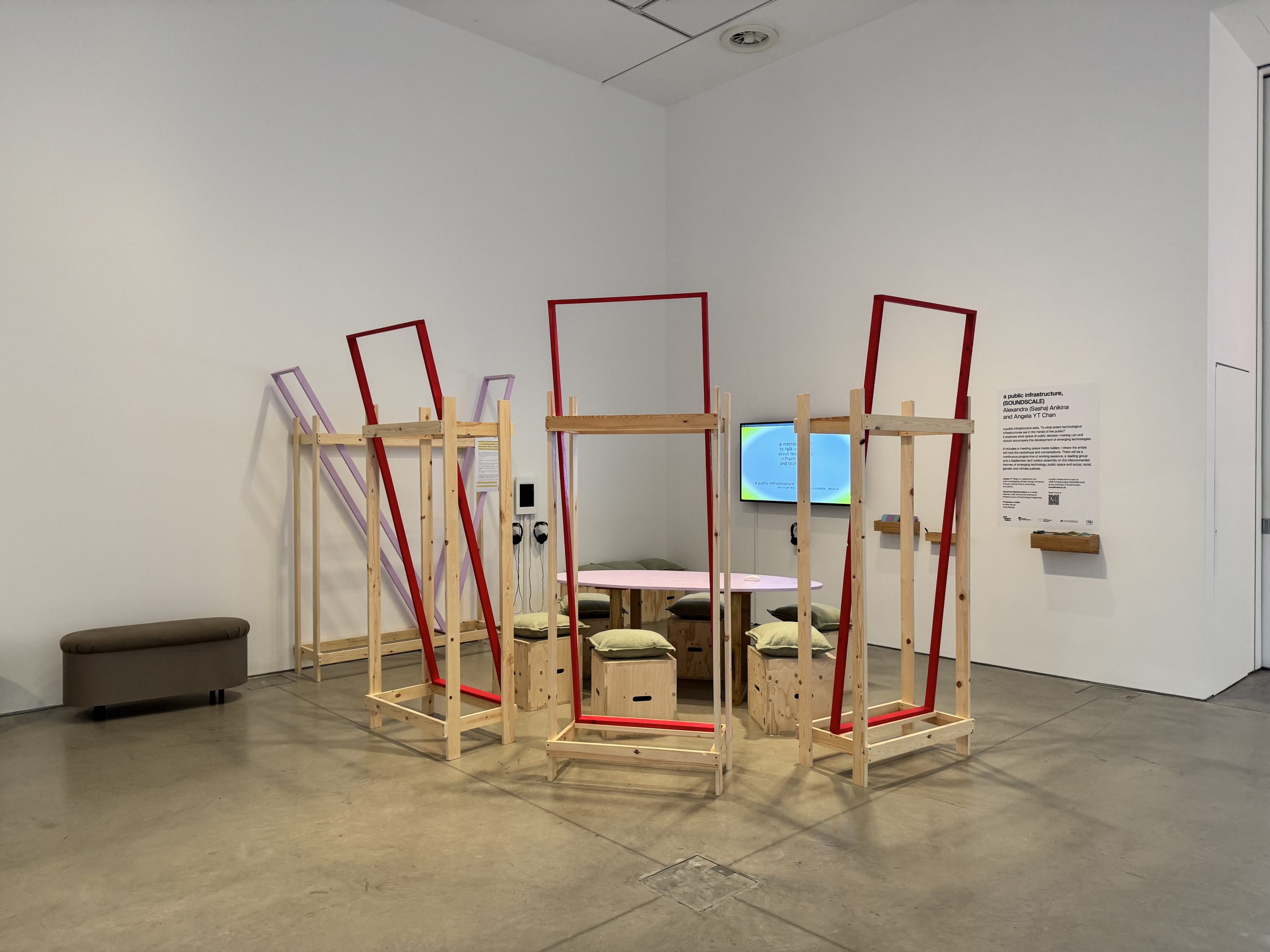
This event is part of a public infrastructure, a project by Alexandra (Sasha) Anikina and Angela YT Chan that asks “To what extent technological infrastructures are in the hands of the public?” It includes a meeting space inside Gallery 1 where the artists will host the workshops. In addition, a public infrastructure will host a continuous programme of conversations, a reading group and working sessions on the interconnected themes of technology, social, racial, gender and climate justices. It is part of UKRI-funded project SOUNDSCALE at the University of Southampton soundscale.ac.uk.

references

  1. CAAT, Weaponising Universities: Research Collaborations between UK Universities and the Military Industrial Complex https://caat.org.uk/publications/weaponising-universities-research-collaborations-between-uk-universities-and-the-military-industrial-complex/ 
  2. The Influence Industry Project, Digital Influence and Climate Friction Gathering 2024 https://influenceindustry.org/en/resources/digitalclimategathering2024/ 
  3. https://datasociety.net/climate-technology-and-justice/ 
  4. Mirca Madianou, Technocolonialism: When Technology for Good is Harmful https://www.politybooks.com/bookdetail?book_slug=technocolonialism-when-technology-for-good-is-harmful–9781509559022 

Book launch: Politics of Surfaces by Neda Genova

2 June, 18:00-19.30 Goldsmiths, Richard Hoggart Building, room RHB143, in-person, registration link

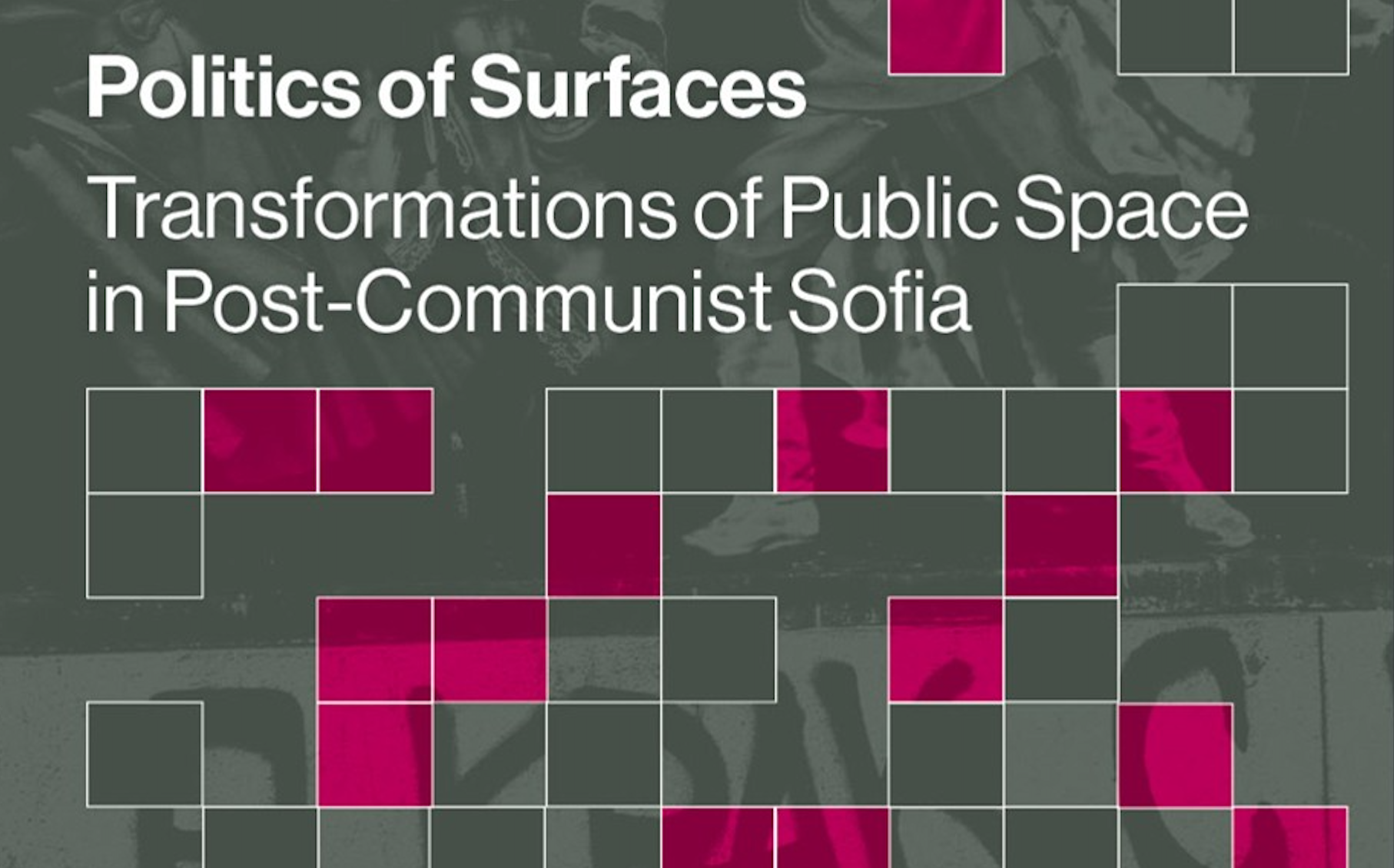
CIIP is pleased to invite you to a book launch of “Politics of Surfaces: Transformation of Public Space in Post-Communist Sofia” by Neda Genova.

What does it mean to examine post-communist politics through the prism of the material and semiotic transformations and modifications of surfaces? A rethinking of surfaces as dynamic and complex sites opens a path for a detailed study of their crucial role in the governing of post-communist urban space – but also of the forms of subversion that can be discerned through interventions on and with surfaces. The book explores a set of surfaces – Wall, Monument, Electricity Boxes, Memes, and Paving Brick – to investigate the kind of political engagement they enable and foreclose in post-communist Sofia, Bulgaria. The examination of each of these sites draws on an array of interconnected theoretical propositions, pertaining to surfaces’ conceptualization as temporal, fictitious and relational objects engaged in the production of political meaning.

Politics of Surfaces brings critical cultural and media theory, philosophy, and post-communist studies into conversation with each other, allowing for a two-fold political and theoretical intervention. On the one hand, it intervenes in existing scholarship on surfaces by demonstrating the stakes of their politicised understanding as complex spatio-temporal objects. On the other hand, it permits the crossing of disciplinary boundaries in the field of post-communist studies (usually reserved for area studies approaches). This involves a rethinking of some of the common presumptions about the post-communist condition such as its apolitical character, the governmental logic of temporal belatedness and the dominance of a memory studies approach for the analysis of post-communist transformations of public heritage sites such as monuments.

The book launch will take place on 2 June, 18:00-19:30, at Goldsmiths, Richard Hoggart Building, room RHB143. Starting with Neda introducing the book’s themes, there will be brief responses from Olga Goriunova, Louis Moreno and Sasha Anikina before opening to general discussion. There will be drinks afterwards.

You can order the book here. There will be copies available at the launch. 

Neda Genova

Neda Genova is Lecturer in the department of Film Studies, University of Southampton, whose interests centre on developing interdisciplinary methodologies in research and teaching; the politics of post-socialist transformation and in particular aesthetic practices of commoning. She’s interested in probing out collaborative methods of knowledge production in and beyond academia – as in the context of the edited volume Post-Communist Grounds. In Search of the Commons(Institute of Network Cultures, 2025). Her writings have appeared in Time & Society, Journal of Visual Culture, New Formations and others.

Olga Goriunova

Olga Goriunova is professor at Royal Holloway University of London and author of Ideal Subjects, The Abstract People of AI (2025), Bleak Joys, Aesthetics of Ecology and Impossibility(2019) and Art Platforms and Cultural Production on the Internet (2012). 

Louis Moreno

Louis Moreno is a writer, lecturer, urban theorist and music producer. His work investigates the cultural modalities of financial capitalism with a critical focus on the spatial aesthetics of architecture, urbanism and electronic music. He is currently a Research Fellow and PhD Supervisor in the Department of Visual Cultures and Centre for Research Architecture at Goldsmiths, University of London.

Sasha Anikina

Alexandra (Sasha) Anikina is a media theorist, artist and organiser who investigates infrastructures and technology imaginaries through feminist technoscience and critical theory. She is Associate Professor in Digital Media and Technocultures at the University of Southampton and co-director of Critical Infrastructures and Image Politics research group.

a public infrastructure, SOUNDSCALE

What are our rights to public spaces? 

What are the technologies that connect us to each other and to these spaces?

What are our rights to these technologies? 

Who hears when we speak out in public spaces? 

Who takes care when listening?

a public infrastructure asks to what extent infrastructures are in the hands of the public. From June to September 2026, it is a meeting space in John Hansard Gallery (Gallery 1) in Southampton, England, as well as a series of workshops, conversations and a sci-fi reading and writing group, leading up to a Tech Justice Assembly in September with everyone who is interested in the same questions.

Reach out to us, sign up to workshops or suggest a conversation through the links below or on social media. This space will be updated with more links and conversations happening in the space.

Instagram: https://www.instagram.com/a_public_infrastructure

E-mail: a.anikina@soton.ac.uk and a.chan@soton.ac.uk

Workshops:

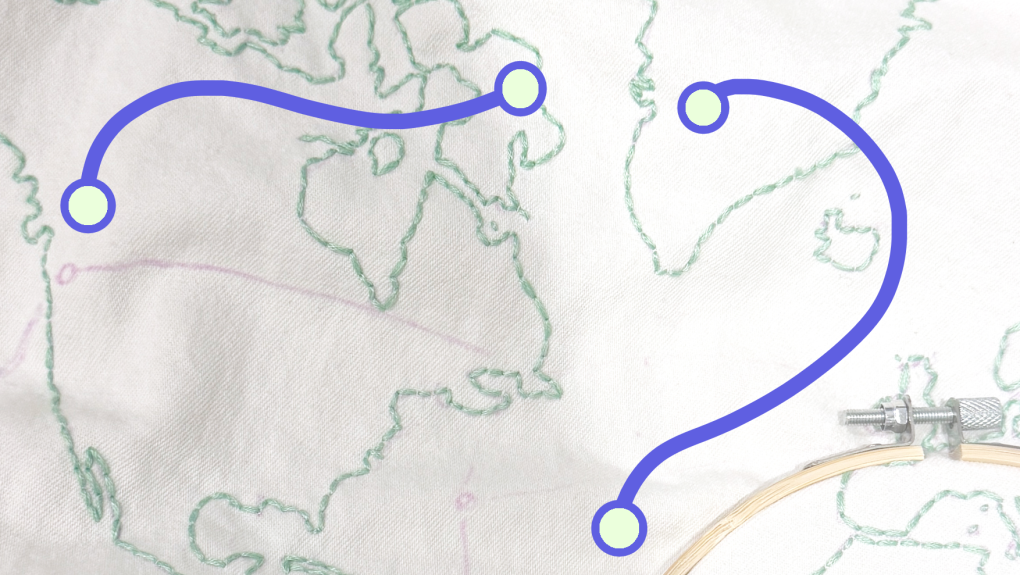
Embroidery and sewing are traditional arts of care and repair. This workshop will invite you to collectively embroider a textile map of Southampton. We will share a conversation on public access to technology in your neighbourhood and ask who provides care and support when infrastructures fail.

​Led by Sasha Anikina. Please book for free here.

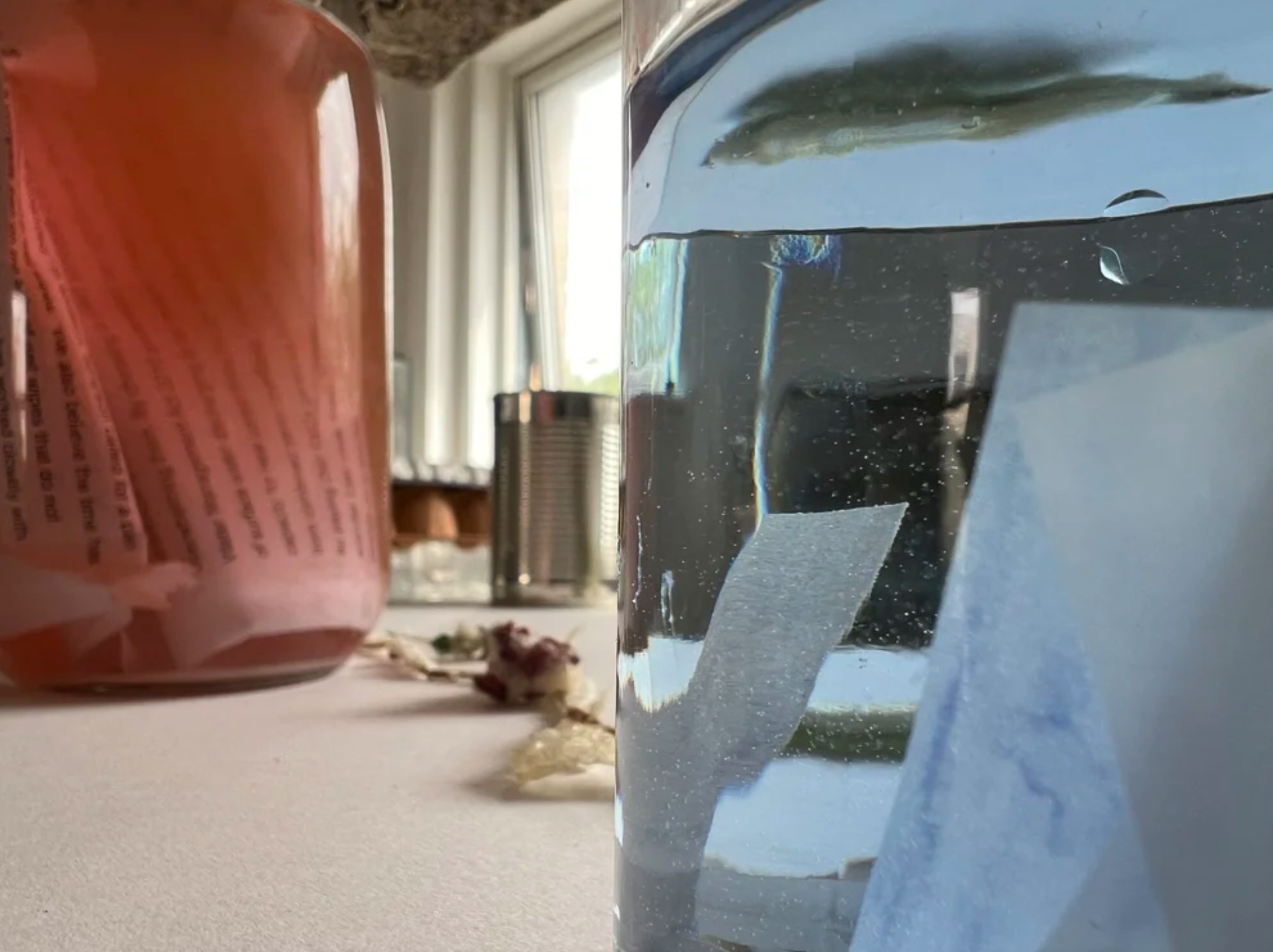
Build paper-based maps to explore your connection to your neighbourhood and community through the themes of technology and place. How publicly accessible are the ways we use technology in the city, and what would strengthen an infrastructure to feel like your neighbourhood’s own?

​Led by Angela YT Chan. Please book for free here.

Play with light to tell stories about technology and your personal data. By designing your own torchlight filters through collaging, writing and drawing, we’ll explore the topics of emerging technologies and surveillance, and shine light on civic resistance in the city.

​Led by Angela YT Chan. Please book for free here.

Embroidery and sewing are traditional arts of care and repair. This workshop will invite you to collectively embroider a textile map of Southampton. We will share a conversation on public access to technology in your neighbourhood and ask who provides care and support when infrastructures fail.

​Led by Sasha Anikina. Please book for free here.

Explore how technology is framed in the climate crisis both as a fix and as a source of material impact on people and the planet. This investigative workshop maps out the connections with consumption, politics and timelines of urgent climate impacts and fast-evolving technological innovations.

​Led by Angela YT Chan. Please book for free here.

Thinking about what voices are heard in public spaces, we frame our workshops as street games that allow us to treat urban space as our own, to document and trace technologies, sound and space. The workshops use communal, creative and investigative methods that are useful and friendly in learning together about the technologies and infrastructures around us in Southampton and Winchester.

The installation unfolds into a one-day public forum in September – a tech justice assembly where we will hold a collective discussion-performance on the rights to technology and rights to public space, drawing on public concerns such as climate, racial and socio-economic justice.

a public infrastructureis a part of (and is funded by) a UKRI-supported research project Soundscale, in collaboration with scientists at the University of Southampton, working on developing sound-sensing technologies that use fiber optic cables infrastructure. You can see more at soundscale.ac.uk.

In the artistic research part of the project, we want to explore how, in the era of being heard but not always listened to, we can speak up; what space of public decision-making can and should accompany the development of emerging technologies and how we can shape the experience of technologies everyday.

Becky Lyon – The Department of Artecology: Who gets to be an ecologist?

Wednesday 29 April 2026, 11:30 – 12:30, Winchester School of Art & online

Registration link: https://luma.com/rsu05wjd

Does data need to be wetter? What would happen if policy walked itself into soily existence?  Why is ‘love’ a dirty word in science? If we could sonify the evidence, whose voices might we hear clearer? What if the environment office was an art studio?

Artist, PhD researcher, London National Park City Ranger, facilitator and brand consultant Becky Lyon draws on her multi-disciplinary background to ask – who gets to design the research, determine what ‘data’ is and make decisions around how nature is taken care of?

She will draw on her artistic research collaborating with government agencies, grassroots groups and fellow practitioners to think about the possible roles of artists. She will draw on her projects as diverse as The Department of Artecology (experimental research gatherings) to Forista (a pop-up cafe experience); Ground Provisions (an artist-led schooled-by-the-forest for adults) and Conservation Practice (a material glossary and archive).

Full Spring Speaker Series: https://criticalinfrastructures.net/events/ciip-spring-speaker-series-2026/

CIIP talks are organised in collaboration with MA Digital Media and MA Fine Art in the Department of Art and Media Technology, Winchester School of Art, University of Southampton.

Critical Mineral Practices

Teresa Dillon, Max Dovey, Yadira Sanchez Benitez & Stephen Cornford, in conversation with Jussi Parikka.

Monday 18 May 2026, 14:00 – 19:30, Rotunda & Lecture Theatre B, Winchester School of Art

Background

Critical Minerals are the raw materials of digital technologies and electrified infrastructures. They are now considered vital resources to sustain national economies and maintain national security, but global supply chains are geopolitically monopolised and enmeshed in both regional conflicts and unethical labour practices. With our contemporary societies so entwined with these minerals and elements, we are bringing together a group of people whose creative practices engage with or offer directions through which to explore such entanglements.

Agenda

The day will bring together a group of artists, curators and researchers with shared concerns and practices, to collectively discuss the spectrum of artistic approaches and questions they raise, with a view to initiating ongoing discussions, developing future collaborations, and just making time for sharing ideas.

Due to the nature of the practices being shared, the afternoon sessions are in person only. The evening conversation with Jussi Parikka is taking place online. Registration link: https://luma.com/pwjo48ol

Timetable

13:00 – 14:00 Arrival and lunch
14:00 – 16:30 Sharing of Critical Mineral Practices by research group members.
16.30 – 17.00 Break 
17.00 – 18.00 Open Discussion session
18:00 – 18:30 Break / opportunity to view Whispers Exhibition, Social Practice Lab
18.30 – 19.30 Conversation with Jussi Parikka (online)
19:30 – 21:30 Dinner

14.00-16.30: Sharing of practices

Teresa Dillon:Teresa will open with a guided visualisation mediation and writing exercise that speaks to awareness to the critical minerals that reside in everyday mobile and network technologies.

Max Dovey:Max has been developing a series of ‘Rare Earth Walks’ as embodied modes for thinking with critical minerals and non-human subjectivities. He will lead a short participatory exercise, exploring the lifecycles of critical minerals and how roleplay could be used to consider the governance of life as it extends into geological terrains. Max is currently preparing this work for family audiences at music festivals this summer.

Stephen Cornford:Stephen will present a short piece for radio compiled from his fieldwork with earth scientists over the last 5 years. In it we hear the technologies of prospecting, the laboratories of earth science, the infrastructures of renewable energy, and the field equipment of geophysics. Our guide during this geotechnical audio tour is Anthony McNulty, the chairperson of Protect Moylisha. Anthony is leading the campaign to prevent the establishment of a lithium mine in County Wicklow, Ireland.

Yadira Sanchez Benitez:Yadira will share an open hardware work consisting of a set of mobile radios powered by small solar panels. We will collectively walk them around the campus as an act of imagination, asking what it might mean for residents to hold a neighbourhood network in their hands, to carry it, place it, move it again. The work asks us to think together about how infrastructure might belong to the people who live alongside it, and what happens when electronics, and the rare earths inside them, are held by hands, by neighbours, by a street that decides where signal should go.

17.00-18.00: Open Discussion
This open discussion session will address two main questions:

Firstly, artistic practices that address specific agendas are often framed as “raising awareness”. We are now in a time when awareness of the Critical Minerals agenda is relatively high­—with, for example, series on BBC Radio 4, an exhibition opening later this year at Oxford Natural History Museum, and books such as Nicolas Niarchos ‘The Elements of Power’ (2026) and Ernest Scheyder ‘The War Below’ (2024) addressing supply chains conflicts, key actors and so-called artisanal mining. Several of us have been working in this area for a decade now, without the questions raised by our practices becoming any less relevant, so we are interested in discussing: what comes after this paradigm of raising awareness?

Secondly, we would like to discuss how our individual and collective work around Critical Minerals and Rare Earth Elements informs and inflects our various practices as educators, curators and organisers?

18.30-19.30: Evening conversation with Jussi Parikka (online)

Winchester’s identity as a centre for research around media materiality begins from the work of Professor Jussi Parikka, much of whose work on media archaeology, in particular his book Geology of Media (2015), was written here. Over ten years later, the legacy of this work has been to create a unique concentration of media geological research and practice in the department of Art and Media Technology. In this conversation we will discuss the relationship between Jussi’s work on media materiality and artistic practice, and the legacy of this important book, including his current focus on environmental media.

AHRC Collaborative Doctoral Partnership Studentship

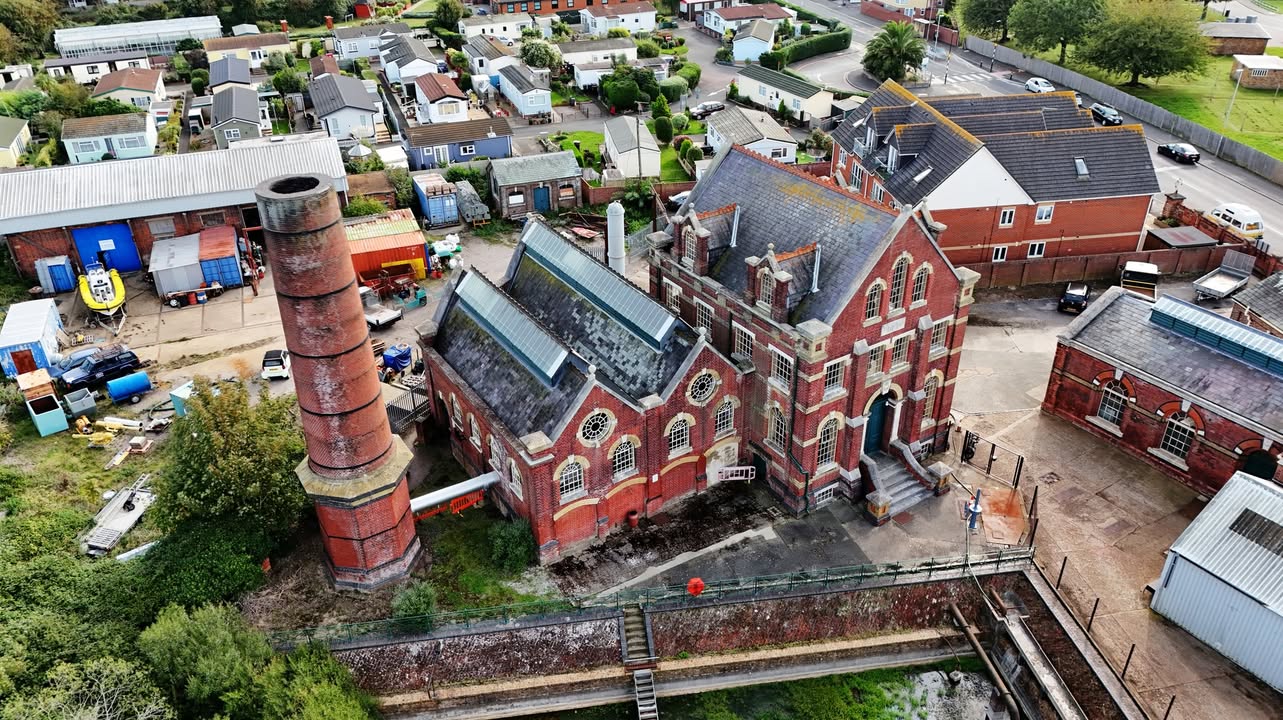
Critical Heritage Stories, Communities, and Technologies: Eastney Engine Houses and the Past, Present, and Future of Industrial Heritage Museums with Portsmouth City Council and the University of Southampton

Start date: 1st October 2026
Application Deadline: 1 June 2026 Deadline Extended to 11 June

The Portsmouth City Council and the University of Southampton are pleased to announce the availability of a fully funded Collaborative doctoral studentship starting 1 October 2026 under the AHRC’s Collaborative Doctoral Partnership Scheme.

This practice-based research project will examine the past, present, and future of industrial heritage museums through a case study of Eastney Engine Houses, in dialogue with Portsmouth Museums’ local and social history collections.

This project will be jointly supervised by Bruce Doswell (Eastney Engineer) and Katy Ball (Curator of Social History), Portsmouth City Council, and Dr Megen de Bruin-Molé, Dr Alexandra Anikina, and Dr Dimitra Gkitsa in the department of Art and Media Technology, Winchester School of Art, University of Southampton. The student will be expected to spend time at both Winchester School of Art, University of Southampton, and Portsmouth City Council as well as becoming part of the wider cohort of CDP funded students across the UK. The student will also be embedded in the activity of Critical Infrastructures and Image Politics research group.

Key Dates:

Shortlisted candidates will be notified by 18 June 2026, and interviews will take place online on MS Teams Wednesday, 15 July 2026. Interview candidates will be notified of the panel’s decision and formal offer letters issued as soon as possible following interviews.

Project Overview 

This practice-based research project, working with Eastney Engine Houses as a case study, explores how post-industrial heritage might operate as a “living archive,” tracing lineages of labour, technology, and community across entangled histories of colonisation, military innovation, urban growth, wartime disruption, and post-industrial change. Through curatorial and/or artistic engagement with the Engine Houses and the city’s collections, the project will consider how industrial heritage practice can critically engage with the interwoven relations of people, infrastructures, and environments. 

This research project takes up the potential to open up heritage spaces to more inclusive and participatory forms of interpretation, exploring how artistic and curatorial practice can activate the Eastney Engine Houses as a site of critical reflection, community engagement, and storytelling rooted in the diverse voices of the communities shaped by, and living with, the infrastructures of post-industrialisation. 

Indicative research questions include:

  • How can industrial heritage museums act as “living archives” within changing urban contexts, using Eastney Engine Houses as a case study? 
  • What lineages of labour, materiality, and collective memory, both human and non-human, can be traced through the Eastney Engine Houses? 
  • Considering Eastney Engine Houses’ volunteer-led conservation efforts, how might collecting present and recent industrial objects reshape community engagement? 
  • In what ways do industrial heritage sites like Eastney Engine Houses address interwoven relations of people, infrastructures, and environments?

The successful student will be expected to spend time carrying out research and gaining relevant experience with Portsmouth Museums and Portsmouth City Council as part of the studentship.

Details of Award, Fees and Stipend

CDP doctoral training grants fund full-time studentships for 4 years or part-time equivalent up to a maximum of 8 years.

The award pays tuition fees up to the value of the full-time home fee (Research Councils UK Indicative Fee Level is£5,238 per year). Students with an ‘overseas’ fee status are welcome to apply but will need to pay themselves the difference between the covered fee and the international fee for PhD in Art or Design (indicative international fee is £20,100 per year). The successful candidate will be required to reside in the UK until completion of the PhD.

The award pays an annual stipend for all students (both home and international). This stipend is tax free, and is the equivalent of an annual salary, enabling the student to pay living costs. The UKRI Minimum Doctoral Stipend for full-time candidates is £21,805. There is also a CDP maintenance payment of £600 per year. The successful candidate is eligible to receive an additional travel and related expenses grant during the course of the project courtesy of Portsmouth City Council worth up to £500 per year for 4 years. If undertaking part-time study these amounts will be pro-rated.

The successful candidate will be encouraged to participate in professional development events and activities organised for all Collaborative Doctoral Partnership students who are registered with different universities and studying with cultural and heritage organisations across the UK. These activities are organised by a coordination team based at the V&A and are designed to provide CDP researchers with the knowledge, networks and skills to thrive in their future careers.

Further details can be found on the UKRI website. The CDP consortium also hosted an online webinar for prospective applicants on 13 April 2026. A recording can be found here: https://www.youtube.com/watch?v=ALgblgLBPLc

Eligibility

  • The studentship is open to both home and international applicants (see above for fees information for international students).
  • Students can take up the studentship as either full or part-time.
  • Students should have a Masters Degree in a relevant subject (including, but not limited to: Art, Anthropology, Art History, History, Curating, Literature and Creative Writing, Exhibition Studies, Conservation Science, Critical Infrastructure Studies, Science and Technology Studies), orbe able to demonstrate equivalent experience in a professional setting in critical and creative practice (including, but not limited to art, curating, design, media, technology).
  • Applicants must be able to demonstrate an interest in the museum and heritage sector, galleries and exhibition studies, curatorial and/or artistic practice and research, and potential and enthusiasm for developing skills more widely in related areas.
  • We encourage applications from a diverse range of people, from different backgrounds and career stages. Thinking of applying but concerned you might not meet all the requirements? Studies show that certain groups are less likely to apply to a role if they don’t meet 100% of the requirements. Accordingly, if you are (for example) a women, Black, Asian, from a Global Majority background, LGBTQI+, neurodivergent or disabled and are interested in this opportunity, we encourage you to apply, even if you personally feel you may not be ready or qualified.

To be classed as a home student, candidates must meet the following criteria:

  • Be a UK or Irish National (meeting residency requirements), or
  • Have settled status, or
  • Have pre-settled status (meeting residency requirements), or
  • Have indefinite leave to remain or enter.

More details: the latest revision of the AHRC Training Grant Funding Guide is available here. All applicants must meet UKRI terms and conditions for funding.

Project details and how to apply

Please apply through the University of Southampton’s online PhD Application Portal, noting in the application that you would like to be considered for the AHRC CDP project at Eastney Engine Houses. We would also advise you to contact the Admissions team (fah-pgr-apply@southampton.ac.uk) directly to ensure they are aware of your application and can support you from the start with any documentation needed.

You will need to select either the ‘PhD Fine Art’ or ‘PhD Design’ to be considered for this opportunity.It does not matter which option you choose, or whether you feel your project explicitly fits one of these two descriptions.

All CDP projects are part of a nationwide programme called the Collaborative Doctoral Partnership consortium. The CDP asks all applicants to complete a voluntary EDI monitoring form here. All responses are anonymous.

Support and Reasonable Adjustments for the Application Process

Please reach out to project supervisors and/or the University of Southampton Doctoral Admissions team in the course of the application process with any access riders or reasonable adjustments. Support or adjustments may include (but are not limited to):

  • Opportunity to speak with project supervisors at HEI and CDP Award Holder about the project and the process.
  • Opportunity to speak with contacts within the HEI and/or CDP Award Holder regarding institutional support systems (e.g. neurodiversity, racial diversity and LGBTQIA+ networks, mental health support, support for carers).
  • Access to interview questions and an insight into the interview process (e.g. selection criteria used).
  • Opportunity to speak with active CDP students to ask questions regarding student experience as part of the CDP scheme—in this case through the central coordination group at the V&A.

University as Infrastructure

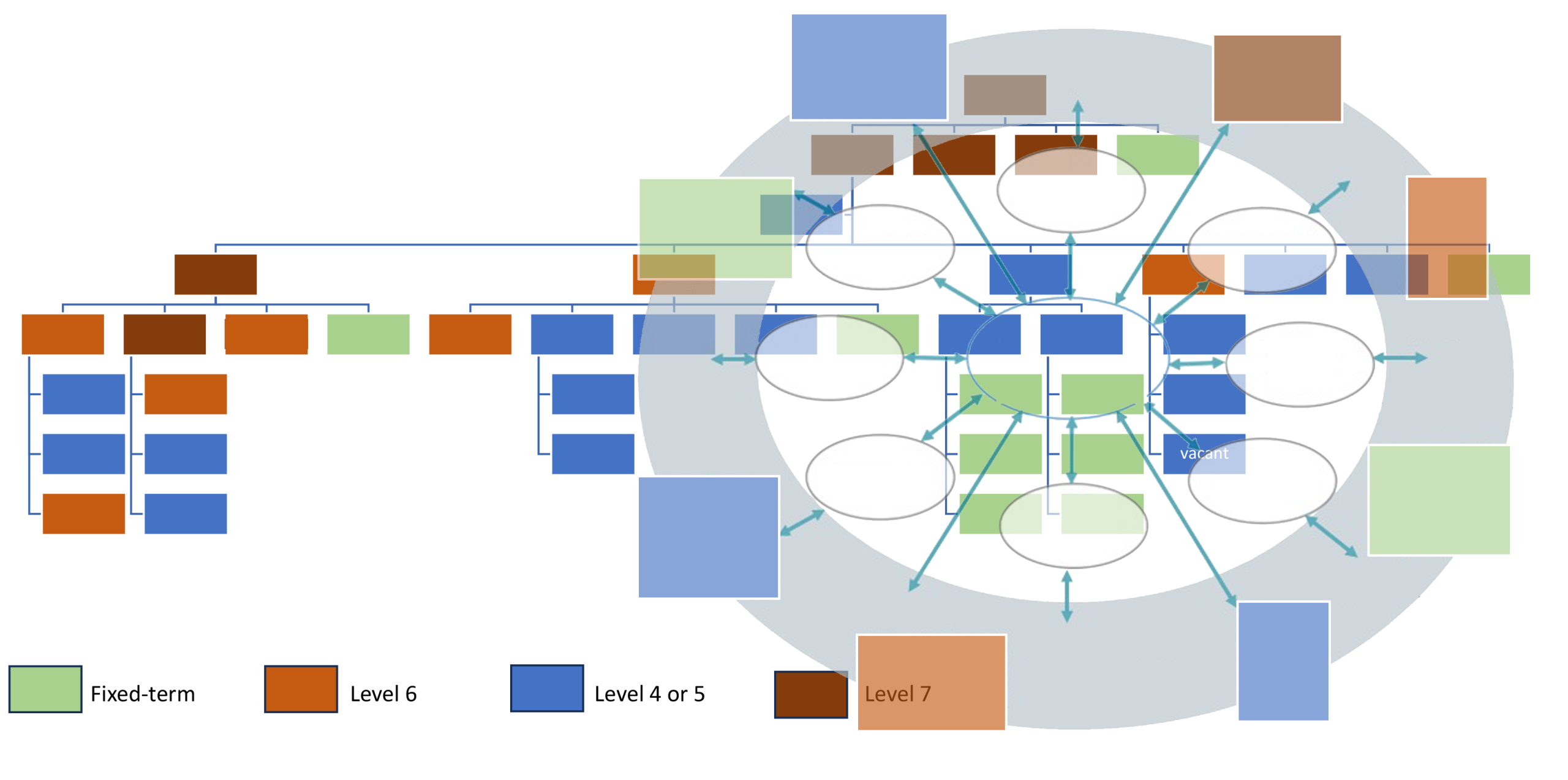
Universities have become increasingly dependent on a proliferation of outsourced services, database providers and information management systems, with spiraling costs across the sector as a whole. From virtual learning environments, digital attendance systems, human resources software, booking platforms, data repositories, and online teaching platforms to the basic provision of email and server space, much of the infrastructure of the contemporary marketised university is outsourced to big tech. The time of both students and staff is increasingly called upon to input, update, confirm, action, and feedback on information stored in outsourced databases, producing surplus value for external software providers, many of which are ultimately owned by private equity firms. The student and staff experience and ‘well-being’ – both vaunted as key priorities by all universities – have become determined by the functionality of these online systems and their ‘affective’ operations.

This project aims to take stock of infrastructural challenges to the collective creation of critical culture and theory. We argue that an understanding of the University from an infrastructural perspective helps to stress that the technologies it chooses to adopt follow a colonial and extractivist model with damaging effects on the wider environment and the well-being of people. What is required are viable alternatives — consisting of technologies but also knowledge practices and organisational cultures, with a commitment to care and justice in development and maintenance processes. We need to look outside the formal educational setting for examples of practices that are more open and collective, adaptive to conditions and allow for the development of infrastructures based on principles of commoning and care. What forms of infrastructure can be imagined in keeping with the free/open exchange of knowledge, sensitive to difference and the operations of power, infrastructures that support collective practices, social, environmental and epistemic justice?

The project has evolved through collaborations with the Centre for the Study of the Networked Image (London South Bank University) and the Critical Media Lab (Basel Academy of Art and Design). A special issue of the journal Culture Machine is currently in preparation, which aims to take stock of the challenges and possibilities for University as Infrastructure. It draws from the conversations we had in two workshops, in the Critical Media Lab and online, including a flurry of participants.

Culture Machine 25 Open Call [now closed]