What are our rights to public spaces?
What are the technologies that connect us to each other and to these spaces?
What are our rights to these technologies?
Who hears when we speak out in public spaces?
Who takes care when listening?
a public infrastructure asks to what extent infrastructures are in the hands of the public. From June to September 2026, it is a meeting space in John Hansard Gallery (Gallery 1) in Southampton, England, as well as a series of workshops, conversations and a sci-fi reading and writing group, leading up to a Tech Justice Assembly in September with everyone who is interested in the same questions.
Reach out to us, sign up to workshops or suggest a conversation through the links below or on social media. This space will be updated with more links and conversations happening in the space.
Instagram: https://www.instagram.com/a_public_infrastructure
E-mail: a.anikina@soton.ac.uk and a.chan@soton.ac.uk
Workshops:
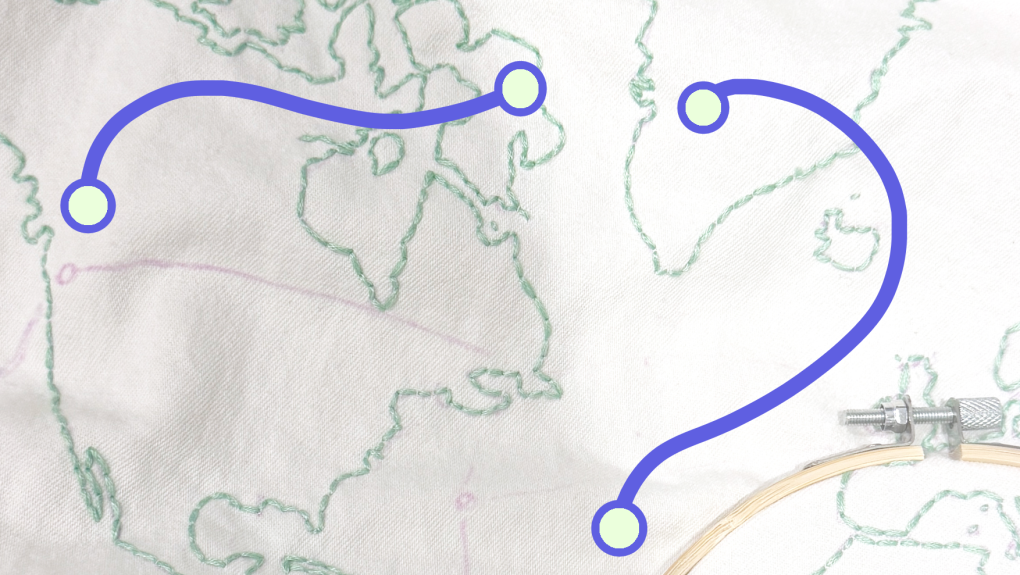
Embroidery and sewing are traditional arts of care and repair. This workshop will invite you to collectively embroider a textile map of Southampton. We will share a conversation on public access to technology in your neighbourhood and ask who provides care and support when infrastructures fail.
Led by Sasha Anikina. Please book for free here.
Build paper-based maps to explore your connection to your neighbourhood and community through the themes of technology and place. How publicly accessible are the ways we use technology in the city, and what would strengthen an infrastructure to feel like your neighbourhood’s own?
Led by Angela YT Chan. Please book for free here.
Play with light to tell stories about technology and your personal data. By designing your own torchlight filters through collaging, writing and drawing, we’ll explore the topics of emerging technologies and surveillance, and shine light on civic resistance in the city.
Led by Angela YT Chan. Please book for free here.
Embroidery and sewing are traditional arts of care and repair. This workshop will invite you to collectively embroider a textile map of Southampton. We will share a conversation on public access to technology in your neighbourhood and ask who provides care and support when infrastructures fail.
Led by Sasha Anikina. Please book for free here.
Explore how technology is framed in the climate crisis both as a fix and as a source of material impact on people and the planet. This investigative workshop maps out the connections with consumption, politics and timelines of urgent climate impacts and fast-evolving technological innovations.
Led by Angela YT Chan. Please book for free here.
Thinking about what voices are heard in public spaces, we frame our workshops as street games that allow us to treat urban space as our own, to document and trace technologies, sound and space. The workshops use communal, creative and investigative methods that are useful and friendly in learning together about the technologies and infrastructures around us in Southampton and Winchester.
The installation unfolds into a one-day public forum in September – a tech justice assembly where we will hold a collective discussion-performance on the rights to technology and rights to public space, drawing on public concerns such as climate, racial and socio-economic justice.
a public infrastructureis a part of (and is funded by) a UKRI-supported research project Soundscale, in collaboration with scientists at the University of Southampton, working on developing sound-sensing technologies that use fiber optic cables infrastructure. You can see more at soundscale.ac.uk.
In the artistic research part of the project, we want to explore how, in the era of being heard but not always listened to, we can speak up; what space of public decision-making can and should accompany the development of emerging technologies and how we can shape the experience of technologies everyday.