
Critical Heritage Stories, Communities, and Technologies: Eastney Engine Houses and the Past, Present, and Future of Industrial Heritage Museums with Portsmouth City Council and the University of Southampton
Start date: 1st October 2026
Application Deadline: 1 June 2026 Deadline Extended to 11 June
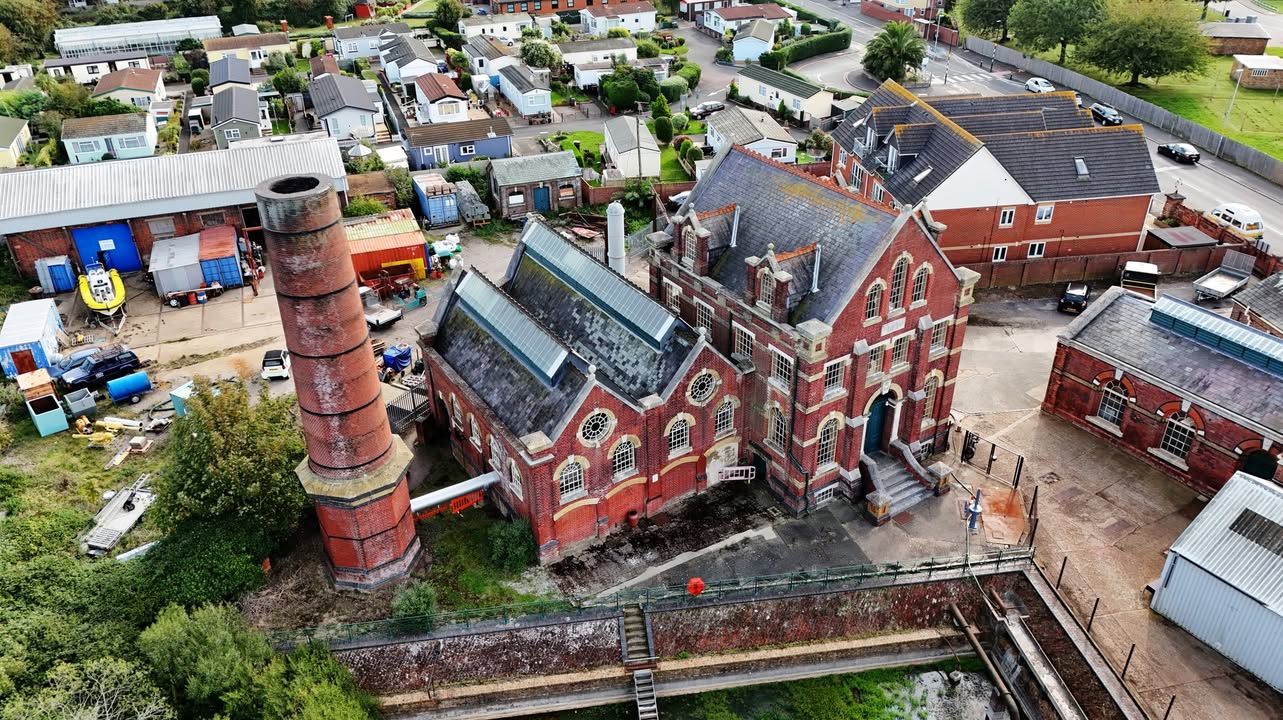
The Portsmouth City Council and the University of Southampton are pleased to announce the availability of a fully funded Collaborative doctoral studentship starting 1 October 2026 under the AHRC’s Collaborative Doctoral Partnership Scheme.
This practice-based research project will examine the past, present, and future of industrial heritage museums through a case study of Eastney Engine Houses, in dialogue with Portsmouth Museums’ local and social history collections.
This project will be jointly supervised by Bruce Doswell (Eastney Engineer) and Katy Ball (Curator of Social History), Portsmouth City Council, and Dr Megen de Bruin-Molé, Dr Alexandra Anikina, and Dr Dimitra Gkitsa in the department of Art and Media Technology, Winchester School of Art, University of Southampton. The student will be expected to spend time at both Winchester School of Art, University of Southampton, and Portsmouth City Council as well as becoming part of the wider cohort of CDP funded students across the UK. The student will also be embedded in the activity of Critical Infrastructures and Image Politics research group.
Key Dates:
Shortlisted candidates will be notified by 18 June 2026, and interviews will take place online on MS Teams Wednesday, 15 July 2026. Interview candidates will be notified of the panel’s decision and formal offer letters issued as soon as possible following interviews.
Project Overview
This practice-based research project, working with Eastney Engine Houses as a case study, explores how post-industrial heritage might operate as a “living archive,” tracing lineages of labour, technology, and community across entangled histories of colonisation, military innovation, urban growth, wartime disruption, and post-industrial change. Through curatorial and/or artistic engagement with the Engine Houses and the city’s collections, the project will consider how industrial heritage practice can critically engage with the interwoven relations of people, infrastructures, and environments.
This research project takes up the potential to open up heritage spaces to more inclusive and participatory forms of interpretation, exploring how artistic and curatorial practice can activate the Eastney Engine Houses as a site of critical reflection, community engagement, and storytelling rooted in the diverse voices of the communities shaped by, and living with, the infrastructures of post-industrialisation.
Indicative research questions include:
- How can industrial heritage museums act as “living archives” within changing urban contexts, using Eastney Engine Houses as a case study?
- What lineages of labour, materiality, and collective memory, both human and non-human, can be traced through the Eastney Engine Houses?
- Considering Eastney Engine Houses’ volunteer-led conservation efforts, how might collecting present and recent industrial objects reshape community engagement?
- In what ways do industrial heritage sites like Eastney Engine Houses address interwoven relations of people, infrastructures, and environments?
The successful student will be expected to spend time carrying out research and gaining relevant experience with Portsmouth Museums and Portsmouth City Council as part of the studentship.
Details of Award, Fees and Stipend
CDP doctoral training grants fund full-time studentships for 4 years or part-time equivalent up to a maximum of 8 years.
The award pays tuition fees up to the value of the full-time home fee (Research Councils UK Indicative Fee Level is£5,238 per year). Students with an ‘overseas’ fee status are welcome to apply but will need to pay themselves the difference between the covered fee and the international fee for PhD in Art or Design (indicative international fee is £20,100 per year). The successful candidate will be required to reside in the UK until completion of the PhD.
The award pays an annual stipend for all students (both home and international). This stipend is tax free, and is the equivalent of an annual salary, enabling the student to pay living costs. The UKRI Minimum Doctoral Stipend for full-time candidates is £21,805. There is also a CDP maintenance payment of £600 per year. The successful candidate is eligible to receive an additional travel and related expenses grant during the course of the project courtesy of Portsmouth City Council worth up to £500 per year for 4 years. If undertaking part-time study these amounts will be pro-rated.
The successful candidate will be encouraged to participate in professional development events and activities organised for all Collaborative Doctoral Partnership students who are registered with different universities and studying with cultural and heritage organisations across the UK. These activities are organised by a coordination team based at the V&A and are designed to provide CDP researchers with the knowledge, networks and skills to thrive in their future careers.
Further details can be found on the UKRI website. The CDP consortium also hosted an online webinar for prospective applicants on 13 April 2026. A recording can be found here: https://www.youtube.com/watch?v=ALgblgLBPLc
Eligibility
- The studentship is open to both home and international applicants (see above for fees information for international students).
- Students can take up the studentship as either full or part-time.
- Students should have a Masters Degree in a relevant subject (including, but not limited to: Art, Anthropology, Art History, History, Curating, Literature and Creative Writing, Exhibition Studies, Conservation Science, Critical Infrastructure Studies, Science and Technology Studies), orbe able to demonstrate equivalent experience in a professional setting in critical and creative practice (including, but not limited to art, curating, design, media, technology).
- Applicants must be able to demonstrate an interest in the museum and heritage sector, galleries and exhibition studies, curatorial and/or artistic practice and research, and potential and enthusiasm for developing skills more widely in related areas.
- We encourage applications from a diverse range of people, from different backgrounds and career stages. Thinking of applying but concerned you might not meet all the requirements? Studies show that certain groups are less likely to apply to a role if they don’t meet 100% of the requirements. Accordingly, if you are (for example) a women, Black, Asian, from a Global Majority background, LGBTQI+, neurodivergent or disabled and are interested in this opportunity, we encourage you to apply, even if you personally feel you may not be ready or qualified.
To be classed as a home student, candidates must meet the following criteria:
- Be a UK or Irish National (meeting residency requirements), or
- Have settled status, or
- Have pre-settled status (meeting residency requirements), or
- Have indefinite leave to remain or enter.
More details: the latest revision of the AHRC Training Grant Funding Guide is available here. All applicants must meet UKRI terms and conditions for funding.
Project details and how to apply
Please apply through the University of Southampton’s online PhD Application Portal, noting in the application that you would like to be considered for the AHRC CDP project at Eastney Engine Houses. We would also advise you to contact the Admissions team (fah-pgr-apply@southampton.ac.uk) directly to ensure they are aware of your application and can support you from the start with any documentation needed.
You will need to select either the ‘PhD Fine Art’ or ‘PhD Design’ to be considered for this opportunity.It does not matter which option you choose, or whether you feel your project explicitly fits one of these two descriptions.
All CDP projects are part of a nationwide programme called the Collaborative Doctoral Partnership consortium. The CDP asks all applicants to complete a voluntary EDI monitoring form here. All responses are anonymous.
Support and Reasonable Adjustments for the Application Process
Please reach out to project supervisors and/or the University of Southampton Doctoral Admissions team in the course of the application process with any access riders or reasonable adjustments. Support or adjustments may include (but are not limited to):
- Opportunity to speak with project supervisors at HEI and CDP Award Holder about the project and the process.
- Opportunity to speak with contacts within the HEI and/or CDP Award Holder regarding institutional support systems (e.g. neurodiversity, racial diversity and LGBTQIA+ networks, mental health support, support for carers).
- Access to interview questions and an insight into the interview process (e.g. selection criteria used).
- Opportunity to speak with active CDP students to ask questions regarding student experience as part of the CDP scheme—in this case through the central coordination group at the V&A.