October 1 2025 | 11:30 GMT | Online via MS Teams REGISTER HERE
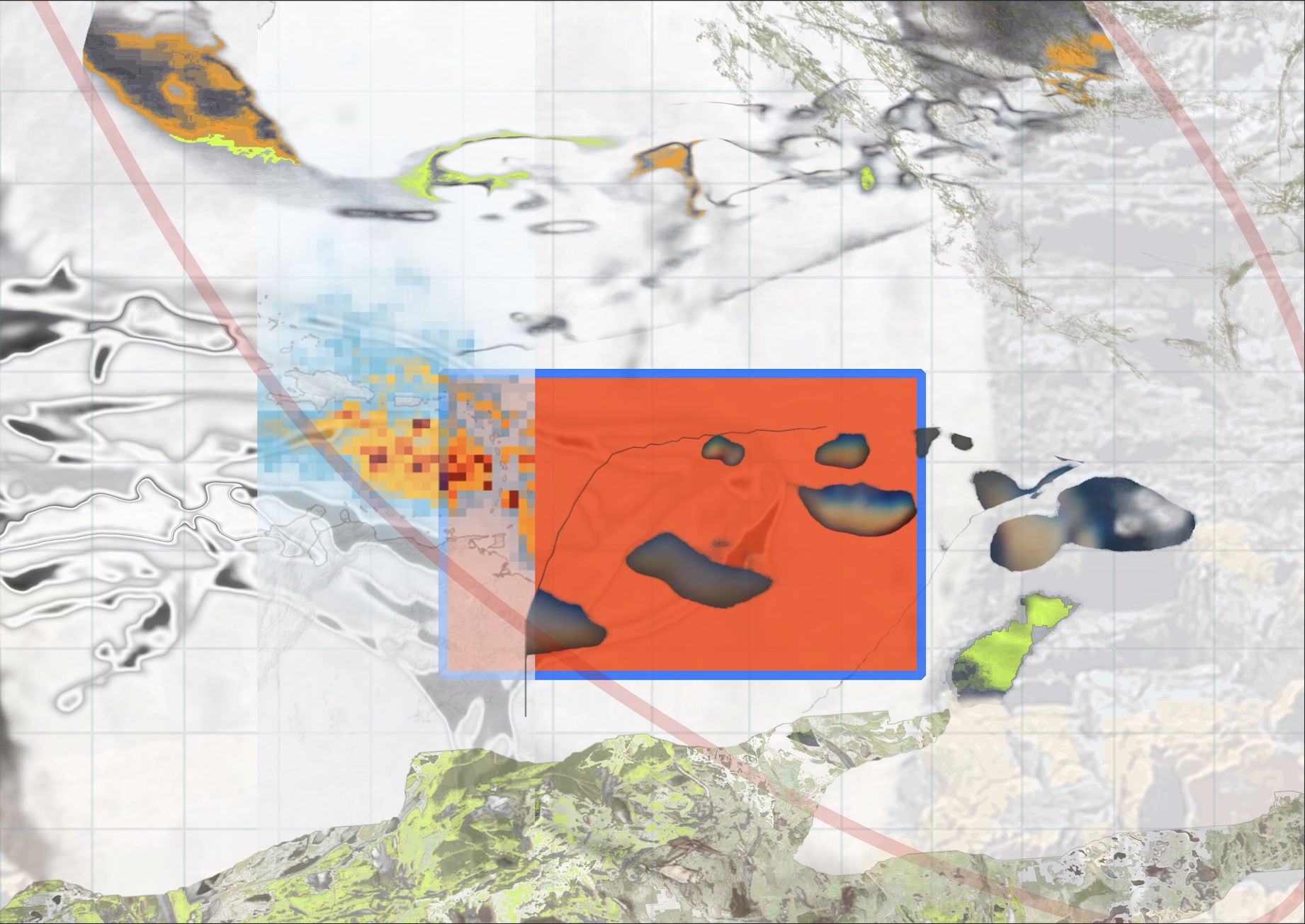
Material Interests Talk: “Critiquing a ‘sustainable military’: an artistic investigation into militarism and the colonial legacies of the climate crisis”
This presentation introduces Angela’s work as an independent research-artist specialising in climate change through one of her longer-term projects. Â
Critiquing a ‘sustainable military’ (2022-) is an artistic investigation into militarism and the colonial legacies of the climate crisis.
By studying the UK military’s net-zero goals for 2050 against the timeline of climate history, Angela’s work engages with collaborators in activism, science and technology studies, and journalism.
Co-Investigator: Alexandra Anikina Artist-in-Residence: Angela YT Chan
SOUNDSCALE is a UKRI-funded project investigating the intersection of emerging technology of DAS, dark fibre networks and urban environment. It involves a collaboration between multiple schools at the University of Southampton. Dr Alexandra Anikina and Angela YT Chan are leading the artistic research strand of the project which is hosted by CIIP and the Departrment of Art & Media Technology, Winchester School of Art.
“SOUNDSCALE aims to approach the responsible research and development of the emerging technology of Distributed Acoustic Sensing (DAS) in smart cities through an interdisciplinary, citizen-centric, and bottom-up approach. We integrate a spectrum of research methodologies, ensuring each discipline informs the others at every stage. This includes unlocking the physical sensing capabilities of legacy optical fibre cables in a UKRI facility; measuring social, spatial, and health inequalities in cities through extensive data linkage; conducting arts-based research to explore citizen’s lived experiences; and studying AI ethics, policy, and environmental implications.
Simultaneously, we will incorporate citizen participation, deliberation, and narratives throughout, fostering a co-creation process, underpinned by a humanistic perspective on the complex intersection of culture, media, society, technology, and critical infrastructures. Our project not only offers a new paradigm for regulating emergent technologies with citizens at the forefront but also commits to mitigating risks, addressing ethical concerns, and ensuring ground-breaking technologies are sustainable, privacy-compliant, and inclusive. In our project, multiple disciplines, from physical, social and environmental sciences to humanities, interlace in a cohesive project, informing each other at every stage and providing reciprocal benefits.”
Online or in-person, Advanced Research Centre, Room 224, University of Glasgow
Event description
The Critical Infrastructures and Image Politics (CIIP) research group warmly invites you to a talk by two of CIIP’s co-directors Sasha Anikina and Kwame Phillips. They will share thoughts some of CIIP’s recent work on haunted/haunting, and the recently announced Culture Machine open call on the University as Infrastructure.
The talk is hosted by the Infrastructure Humanities Group at the University of Glasgow.
bio
Critical Infrastructure and Image Politics (CIIP) is a research group dedicated to investigating the politics of contemporary digital and visual cultures at the intersection of media art and critical theory. They foreground transdisciplinary and practice-based methodologies of artistic and activist-led research in media and technocultures with specific interests in material infrastructures, critical posthumanities, algorithmic visual cultures, feminist and decolonial technocultures, and media ecologies.
The Infrastructure Humanities Group is a research group dedicated to elaborating the methodologies and theoretical insights of the infrastructural humanities to address the material needs of diverse partners – from community to policy to industry – and make legible otherwise unavailable forms of collective agency and ways of knowing.
Universities have become increasingly dependent on a proliferation of outsourced services, database providers and information management systems. From virtual learning environments, digital attendance systems, human resources software, booking platforms, data repositories, and online teaching platforms to the basic provision of email and server space, much of the infrastructure of the contemporary marketised university is outsourced to big tech. The time of both students and staff is increasingly called upon to input, update, confirm, action, and feedback on information stored in outsourced databases, producing surplus value for external software providers, many of which are ultimately owned by private equity firms. The student and staff experience and ‘well-being’ – both vaunted as key priorities by all universities – have become determined by the functionality of these online systems and their ‘affective’ operations.
Vol 25 of Culture Machine aims to take stock of these infrastructural challenges to the collective creation of critical culture and theory. We argue that an understanding of the University from an infrastructural perspective helps to stress that the technologies it chooses to adopt follow a colonial and extractivist model with damaging effects on the wider environment and the well-being of people. What is required are viable alternatives — consisting of technologies but also knowledge practices and organisational cultures, with a commitment to care and justice in development and maintenance processes.
We are recruiting an Artist in Residence to undertake artistic research with a focus on Distributed Acoustic Sensing (DAS) technology, in the context of the recently awarded UKRI grant ‘SOUNDSCALE: Sensing On Urban Noise: Distributed Sensing for Collaborative and Sustainable Cityscapes and Living Environments’, http://soundscale.ac.uk.
The role
The postholder will be based in the Department of Art & Media Technology in Winchester School of Art, University of Southampton and within the Critical Infrastructures and Image Politics research group, https://criticalinfrastructures.net/.
The postholder is expected to conduct independent artistic research and to collaborate with members of the research team by participating in team meetings and contributing to methodology, research process and outcomes. The SOUNDSCALE project aims to study the emergence of DAS technology from an interdisciplinary perspective, including contributions from the arts, humanities, social and physical sciences.
We invite applications from a wide variety of practices and want particularly to welcome applicants with experience of community work and community engagement, interdisciplinary research and critical approaches to technology and infrastructure. This role is especially relevant to applicants working with technology from a variety of standpoints, including civic and community-oriented technology, feminist and decolonial approaches, sound art, algorithmic governance, media and cultural studies, digital media, environmental approaches, and others. The communities and physical research sites of the project are located in Southampton and London.
You will be an artist with a portfolio of research projects. A PhD is not required for this role. Apply by uploading your portfolio and CV outlining your professional experience.
The postholder will actively participate in the research process according to their expertise and will offer a distinct contribution to the project, with the potential to integrate their existing methodologies into the methodology of the project. The postholder will closely work with Project Co-I Dr Alexandra Anikina, and with other members of the research team, including PI Dr Rafael Mestre, Co-I Prof Matt Ryan, Co-I Prof Dianna Smith, Co-I Prof Mohammad Belal and others, as well as our community partners.
The postholder will contribute to outcomes and impacts, including engagement activities and knowledge exchange resources, potentially including policy guidelines, toolkits, co-authoring papers, etc. The project comes with funding for production of artworks, as well as travel budget for conference attendance and mentoring support.
We encourage interested candidates to contact CIIP co-director and Co-I Dr Alexandra Anikina (a.anikina@soton.ac.uk) and PI Dr Rafael Mestre (r.mestre@soton.ac.uk) with informal enquiries.
*The title of Research Fellow in Artistic Research or Senior Research Assistant in Artistic Research will be applied upon appointment depending on the successful candidate’s qualification level.
The environment
You will join a supportive, highly interdisciplinary environment in a working group of colleagues from different disciplines. You will have research freedom to design your own path to achieve the project’s goals.
The Department of Art & Media Technology works across art, game design, cultural leadership, digital media, creative technologies, and curating. The department supports a politically alert and contextually astute, interdisciplinary research environment, in which practice-based, scholarly, and editorial processes are at play.
Thinking of applying but concerned you might not meet all the requirements? Studies show that certain groups are less likely to apply to a role if they don’t meet 100% of the requirements. If you feel this is the right project for you, we encourage you to apply, and particularly welcome women, Black, Asian and minority ethnic, LGBTQI+ and disabled applicants.
This year marked the Critical Infrastructures and Image Politics research group’s first collaboration with the transmediale festival in Berlin, part of an extended collaboration between transmediale and Winchester School of Art (University of Southampton), which is planned to continue with future iterations of the festival.
transmediale is an annual festival that brings together international artists, researchers, activists, and thinkers with the goal of developing new outlooks on our technological era through the entanglement of different genres and curatorial approaches. In the course of its history, transmediale has grown from its beginnings as VideoFilmFest to one of the most important events for art and digital culture worldwide.
CIIP co-directors Alexandra (Sasha) Anikina, Kwame Phillips, and Megen de Bruin-Molé coordinated a series of three events at the festival, which ran from 29 January through 2 February 2025. These events corresponded to the festival theme of ‘(near) near but – far’, expanding on this theme through the lens of ‘haunting/haunted’. How do we develop a necropolitics of resistance in this political climate, saturated by crisis real and fabricated, persevering in conditions that are unthinkable, being sucked / plunged into something we might conceptualise as ‘cybergothic’ (Van Elferen 2009, Konior 2020, Anikina 2024)? How do we live in proximity to this horror that is both palpable and incorporeal, the toll that it takes, still persisting and working despite the increasing weight?
Haunting, writes Avery F. Gordon, ‘is distinctive for producing a something-to-be-done […] precisely the domain of turmoil and trouble, that moment (of however long duration) when things are not in their assigned places, when the cracks and rigging are exposed, when the people who are meant to be invisible show up without any sign of leaving, when disturbed feelings cannot be put away, when something else, something different from before, seems like it must be done’ (2008, p. xvi). It also implies the kind of haunted, occult space described by Franz Fanon, Sonjah Stanley Niaah, or Katherine McKittrick; potential places of redemptive, transformative simultaneity, where the haunting presence and the haunted present are both proximate and synergistic.
In the half-day ‘Structures of Haunting’ workshop, a group of 25 participants reflected on ways in which the present is haunted by past(s) and futures. What are the structures and infrastructures that scaffold this haunting, and bring it close both temporally and spatially? To explore this question, a group of seven artists and researchers hosted by Winchester School of Art engaged in a series of divination and séance attempts, seeing these as practices of enactment in the present, rather than of predicting ‘the future’ or uncovering ’the past’. Participants joined the workshop both online, and in the basement of a former crematorium in silent green.
Combining sound (a performative sound piece by Liz Gre), voice (a performative eulogy by Kwame Phillips), movement (a dance performance by Rebecca Pokua Korang), and intervention (a sonic and gestural call and response by SA Smythe), ‘Echoes of Care’ was a collaborative multidisciplinary performance exploring the theme of haunting and Black ways of care, and exploring the body as a vehicle for epiginetic memory of carelessness and carefulness. Playing physically with the concept of closeness (of those performing) and proximity (to the audience who remain peripheral), the performance considered the sound of careFULness and careLESSness and how that sound might echo through our bones, memories, and beyond.
On the last day of the festival the CIIP team gathered for Sasha Anikina’s lecture-performance ‘On the Cybergothic’, a short audiovisual interrogation of the politics of substitution. While substitution of politics is a general condition (“Having looked for politics in order to avoid it, we move next to each other, so we can be beside ourselves”, say Moten and Harney in the Undercommons), the politics of substitution is one of its digital-born symptoms. As we are offered neoliberal “politics” as a substitute, our digital shadows grow into doppelgängers, substitutes of ourselves in the eyes of larger infrastructures. From digital twins and grief bots to smart home as dual-use tech, the worlds of the cybergothic violence are never too far. How far does the substitution stretch? What haunts our online spaces? What ways of being, mourning and existing online can we embody?
This lecture-performance was followed by a discussion and meditation on the theme of haunting/haunted between Sasha, Kwame, and Megen, in which they looked back over the events of the festival. They also acknowledged the present absence of their fellow co-director Stephen Cornford, who was not able to attend the festival, but who will be on a residency at ZK/U | Zentrum für Kunst und Urbanistik in March/April 2025 to work on a film about carbon accounting and its visualisations in forestry.
Other CIIP members and colleagues from WSA were also featured at the festival, including a screening and conversation with artists Bhenji Ra and Tati au Miel chaired by Liz Gre, and several events and screenings related to Ryan Bishop and Jussi Parikka’s WIND project.
“Ours is a time with a dark heart, ripe for noir, the gothic and the baroque” (Zafón 2020).
Watch out for CIIP’s presence exploring haunting/haunted at the 38th transmediale festival for digital art and culture taking place in Berlin from January 29th to February 2nd, featuring directors Megen de Bruin-Molé, Kwame Phillips and Sasha Anikina and with collaborations with Liz Gre, SA Smythe, Rebecca Pokua Korang, Chera Kee, Francis Gene-Rowe, Yaqian Lai, Yadira Sánchez Benitez, Georgia Perkins and Alejandro Limpo Gonzalez.
WED 29.01 14:00 Silent Green/Betonhalle Workshop: “Structures of Haunting” led by Megen de Bruin-Molé (also live-streamed).
SAT 01.02 11:00 HKW/Angie Stardust Foyer Performance: “Echoes of Care” with Liz Gre, Kwame Phillips, SA Smythe and Rebecca Pokua Korang.
SUN 02.02 11:30 HKW/Angie Stardust Foyer Lecture Performance + Conversation: “On the Cybergothic” + “Haunting/Haunted” with Sasha Anikina + Megen de Bruin-Molé and Kwame Phillips.
October 31 2024 | 15:00 GMT | Lecture Theatre A, Winchester School of Art and online REGISTER HERE
Angela YT Chan is an independent researcher, data engineer and artist specialising in climate change.In her talk she will introduce key themes across her practice that focuses on how climate change narratives in the public domain relate to colonial histories, technologies and justice. She will share creative digital methodologies in her critical research and interdisciplinary collaborations through highlighted projects. These include “forestscapes”, a collective inquiry into forest and ecological restoration with generative arts and sound materials with Public Data Lab (KCL), and her independent research-arts practice with current projects “Critiquing a ‘sustainable military’” and “The Colonial History of Climate Tech” (supported by Tactical Tech and Heritage for Global Challenges Research Centre respectively).
Bio
Angela YT Chan is an independent researcher, data engineer and artist specialising in climate change. Her work explores power, narrative framings and technology in the colonial and ongoing history of the climate crisis. Angela works with a variety of media and processes, such as video, illustration, writing, narrative games, workshops, sound, creative coding, and her projects often include extensive collaborations in arts, technology, policy and activism (recently Public Data Lab, The Policy Institute). Highlight residencies include Arts Catalyst, FACT/Jerwood, Sonic Acts, Primary, Abandon Normal Devices, and Tactical Tech.
Angela has produced curatorial projects and workshops, collaborating with artists, activists and youth groups (formerly under the name Worm: art + ecology, 2014-2020). She co-directs the London Science Fiction Research Community. As a university educator, she teaches climate colonialism, environmental and social justice in art practices, critical research, games and speculative fiction (Goldsmiths UoL, KCL, RCA, WSA), and mentors artists working on digital media technologies. Angela is also a research consultant, having worked in international climate and cultural policy at Julie’s Bicycle and independently on climate projects for major cultural institutions. She has recently joined INTERPRT, a research agency that pursues environmental justice through spatial and visual investigations.
The talk is part of CIIP Speaker Series organised in collaboration with MA Fine Art and MA GMM in the Department of Art and Media Technology, Winchester School of Art, University of Southampton.
October 15 2024 | 10:00 BST | Fishbowl, 1039 Eastside Winchester School of Art
Visual artist and founder of Banner Repeater, Ami’s practice works critically across art and technology, in film and video, sculpture and sound, often coming together in multi-media installations. Her work uses live data, game engines, Virtual Reality, CGI, and 3D model making to create environments in real life, in VR, and on-screen. Ami’s work explores ways of living with complexity and uncertainty, drawing out interdependencies across finance, the environment, and ideological apparatus such as neoliberalism, from a critical xeno-feminist post-human position. What that means is there is an emphasis on grasping something of the complexity of the multi-temporalities and scales, cross-species contaminations and alliances, necessary to confront the environmental challenges ahead – within an evolving awareness of power relations, which necessarily take into account colonial histories as well as neocolonial extractions of value.
Test screening of the video essay Time Sticks to the Walls by Krassimir Terziev and Tsvetelina Hristova and discussion with the authors.
Between 1945 and 1989 the People’s Republic of Bulgaria, part of the East-European Socialist Bloc, undertook the construction of public parks and amusement complexes for the working class. These structures were once built with a sweeping determination for a future that never materialised. The promise of a classless communist utopia operated with a vast horizon of a planetary communal futurity, where scale sealed the certainty in a deterministic line of progression and projected the vision of accessible and disciplined sociality. 1989 interrupted the trajectory of this imagined future and with this interruption, the temporalities of infrastructural developments and relations shifted into the unstable terms of public procurement contracts that banked the accumulations of the past into fungible futures.We reflect on how artistic exploration can provide an outlet to engaging with loss and trauma in the post-socialist urban landscape. The focus on loss opens the space for a critical interrogation of the possibilities of reclaiming an affective infrastructural commonality of joy, leisure and recreation beyond the consumerist spaces of the capitalist city.
Krassimir Terziev is an interdisciplinary artist whose work spans a diversity of media, including video/film, photography, painting/drawing, and text, questioning the boundaries between reality and fiction, while exploring the manifold transitions and tensions between a globalized world, dominated by overwhelming multiplicity of symbolic imagery, and its material groundings in technological, physical and human ‘hardware’.
Tsvetelina Hristova is a Teaching Fellow in media studies at the Winchester School of Art, University of Southampton and part of the Critical Infrastructures and Image Politics research group. Tsvetelina works on topics that interrogate the politics of media, mediation and automation.